
As I stood obediently in line behind this barrier I was quietly amused by the two chrome poles arrested in a state of freefall. The once imperial red velvet rope hanging on for dear life between them. Out of idle curiosity I gently nudged one pole and watched as it lazily fell away from me. I knew it was something I could fix and wondered if it might be a suitable project for Fixing for strangers? Perhaps it was too small a problem? Too easy to fix!?
An awkward start.
I stepped up to the desk to make my appointment and just before I turned to leave I pointed at the poles and asked the receptionist if I could fix them? Her response took me by surprise, she was defensive and prickly with me, did she think I was complaining? To recover the situation I quickly clarified that I would like to fix them for free and she transformed before my eyes. “Free of charge?” she beamed as her expression changed from world weary cynicism to warm delight. I found the experience a little disconcerting but also felt empathy for someone that has to deal with people all day everyday.
Just to be sure I could fix it I turned the base over, yup, just as I had suspected, it was all held together by a single bolt and it was just loose. I explained that I had to pop home to get a spanner and I’d be back soon. As I pushed my buggy out of the surgery I calculated whether I had enough time to get home, pick up a spanner, come back to fix the poles and get home again in time for my son’s next feed. Having kids can make doing the simplest of things a challenge.
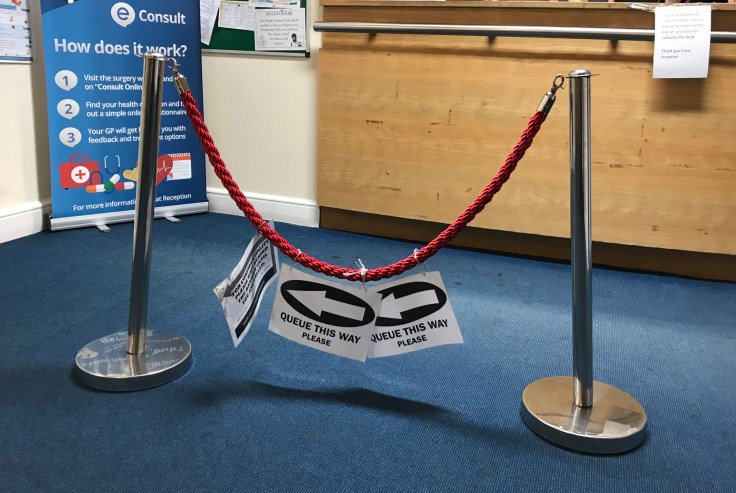
Fixing feels good.
About quarter of an hour later I was back with my adjustable spanner, tipped the barriers over, and with a few turns it was all done. It was such a simple job to do that it was at once easy to see how it could be overlooked and also surprising that it could be ignored. Such is the fate of low priorities.
I was touched by the warmth and gratitude I received for such a simple act. This was my first fix since I started Fixing for strangers and it felt pretty good. I swung my buggy out the door leaving some pleasantly surprised people behind and dashed home for feeding time with a contented grin on my face.
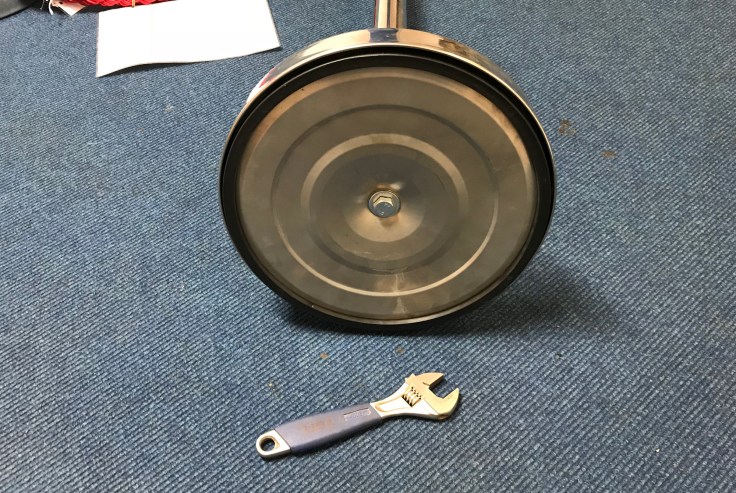
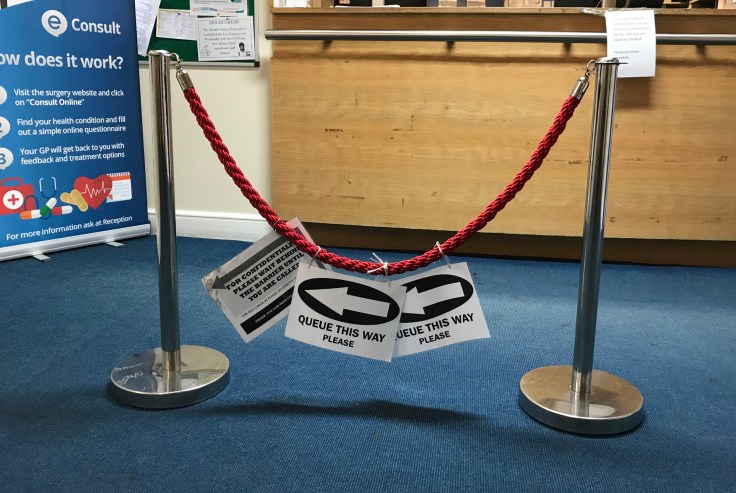
A fixers work is never done.
Later as I reflected on the day, I realised my intervention was temporary; it would just be a matter of time before the bolt came loose again. Rather than feel defeated, this inevitability made me want to figure out a better fix.
I’m now seeing wobbly barriers everywhere I go, I experienced this before with broken Brabantia bins! It’s known as the Baader-Meinhof phenomenon; by noticing one wobbly barrier, I simply acquired selective attention for wobbly barriers and bam, I’m spotting them everywhere, from coffee shops to banks to airports.
Why is this problem so common? Why hasn’t a solution been developed?!!! I suspect that it’s too insignificant a problem to warrant attention so it persists under the radar where it can freely continue to irritate people, nestled and incubated in that perfect nook between broken, but not broken enough.
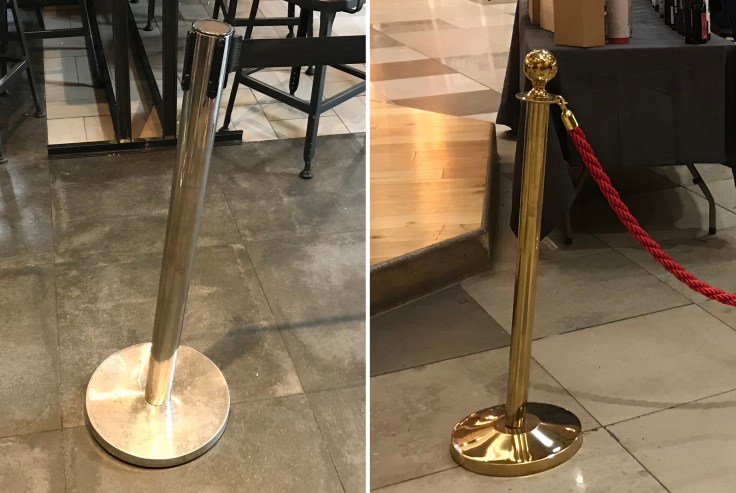
The problem.
If a loose bolt resulted in the pole falling over I’m sure it would be fixed immediately, but it just leans a little and that makes it tolerable. Fixing it might well be on someones to do list but it’s certainly not a priority. Making the time to find the right tool, turn the pole over and tightening the bolt takes a concerted effort and it’s the combination of these factors that conspire to keep problems like these alive and thriving all around us. The problem is not so much a loose bolt but the fact that we can live with a loose bolt.
1: The preventative fix.
My first thought was to prevent the problem from occurring in the first place and thread locking glue came to mind. This glue is used a lot in industry and by professionals to stop nuts and bolts coming loose from vibrations and general use while still allowing them to be opened again. Products like Loctite 243 or 3M’s thread Locker TL43 are incredibly easy to use, just apply a few drops to the thread and use the bolt as normal. But now, as I think about it, I’m pretty sure the manufacturer already use a thread locking glue on these bolts! The reality is that all it can really do is delay the inevitable. Perhaps prevention isn’t an option!
2: The built in fix (that didn’t work)
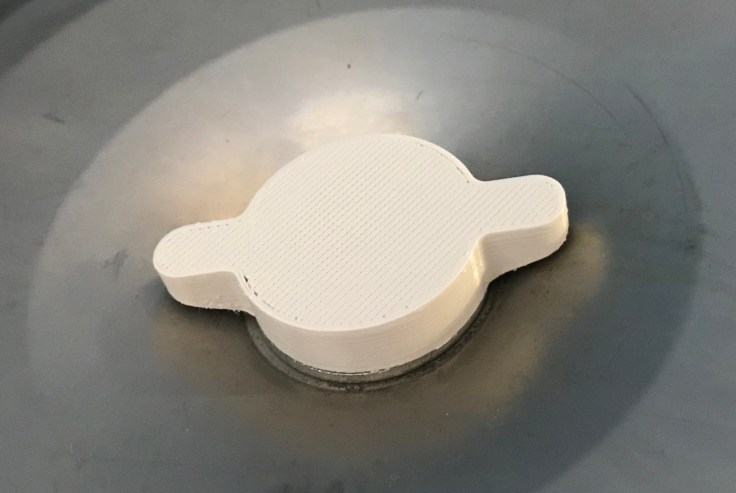
Alternatively I wondered if it was possible to build in a means of tightening the bolt without needing a tool? What if I turned the bolt into a wing-bolt with a little accessory? I could 3D print an attachment that would fit onto the end of the bolt, in theory, this would allow the bolt to be tightened by hand without the need to use a tool so anyone could simply turn the barrier over and give it a twist or two to fix it.
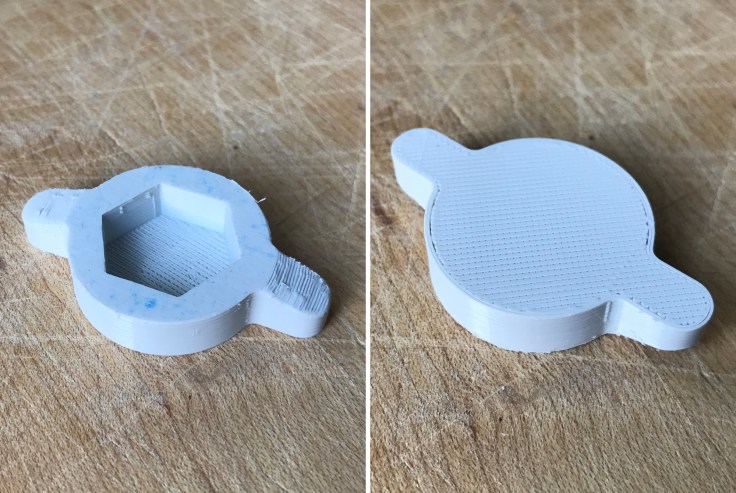
After a bit of 3D modelling and a quick print, I popped in to test this prototype, it was a lovely snug fit but it just didn’t offer enough leverage to tighten the bolt at all. If this idea was to work, the wings would need to be bigger, I just wasn’t convinced it would be possible to make them large enough to fit within the available space in the base. The principle of building in a fix is super interesting but this was definitely not the right approach.
3: The retrospective fix.
In spite of this failure, testing the wing-bolt concept turned out to be a very valuable exercise, it helped me to see that turning the pole over to access the bolt would be a deterrent to someone tightening it. Every additional step in a process contributes to a reduction in the probability of it happening. I concluded that the process needs to be as simple as possible…
Now that I’m thinking that the solution needs to bypass turning the pole over it allowed me to see everything differently! All of a sudden I imagined that the pole itself could be the spanner. Hahaaaa, this literally turns the problem upside down 🙂
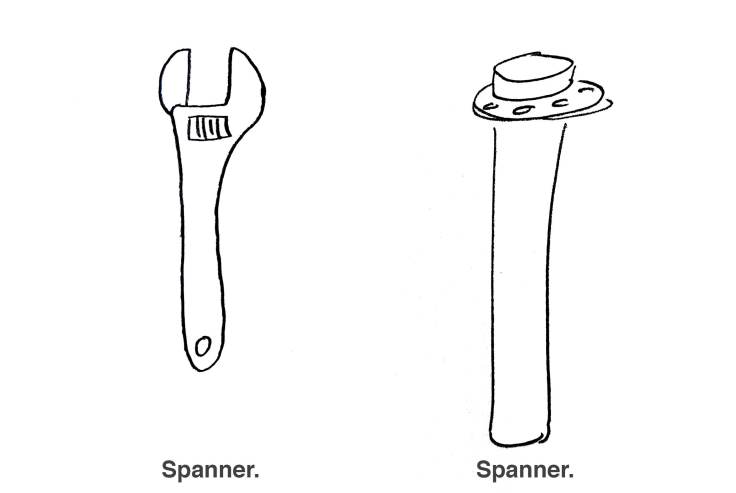
For this to idea to work the bolt would need to be locked in place so that it can’t turn, a simple twist of the pole could therefore tighten it, all without turning it over! Could the fix really be that simple?!!!!
Existing barriers could be retrospectively fixed with some glue, a few drops of epoxy resin to set the washer and bolt in place. Hahaaa, just imagine, you see a wobbly pole so you give it a quick twist and it’s tight again. No tools, no maintenance people, no hassle.
I love this idea but my favourite thing about it is how it builds fixing right into the design by acknowledging an inevitability and responding accordingly. The beauty of this fix is anyone can do it, I could even see myself standing in line and giving a wobbly pole a quick twist 🙂
4: The future fix.
Based on the assumption that this idea works, a little bit of glue could be used to retrospectively fix this problem and could easily be implemented by maintenance people on the existing barrier poles around the world. But I wonder if there is a version of this simple solution that could be integrated into the design of the millions of barrier poles yet be manufactured?!
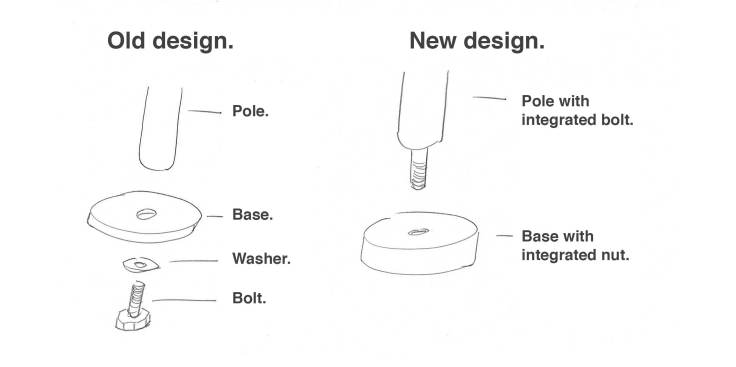
My mind immediately recalled a very common detail employed to hold a nut in place on millions of products, just like the plastic mudguard shown below. All of a sudden, integrating a nut shaped recess into the base of the barrier feels like an obvious future fix to hold the bolt firmly in pace to allow the pole to function as a spanner.

This naturally leads me to an even simpler solution still. Integrating the bolt into the pole and setting the nut into the base. This is a reverse of the current arrangement that should reduce the number of components and be quicker and easier to assemble while still allowing for the product to be packed flat for shipping.
And there we have it folks, several tiny fixing options for one tiny problem, a problem of no consequence that we are all happy to ignore 😉 Joking aside, I thoroughly enjoyed this journey. While it feels like an indulgence to spend time considering a “problem” like this, it fills me with immense pleasure to think about removing these minute annoyances from the world. Now all I need is for a manufacturer to embrace these ideas and implement them so I can rest easy. Hahaaa, making a change to a manufacturing process is no small undertaking so I won’t hold my breath, but I can dream 🙂
Thank you for taking the time to read this post, I do hope you find these explorations interesting and they energise you in some way. While you’re here, why not sign up to follow this blog and of course, let me know your thoughts and share your suggestions, I’d love to hear from you.
Until next time, happy fixing.
James
 Fixing For Strangers.
Leave a comment